

Table of Contents
As LED video walls become increasingly popular, it’s essential to understand the components that make up their image quality. One crucial element is resolution, which refers to the number of pixels on a display screen. Understanding LED video wall resolution is essential to creating the best image quality for your video display. LED video wall resolution is a measurement of the number of pixels that are displayed on the screen. It directly affects the image quality and determines the level of detail that can be seen on the screen.
From the basics of LED video wall resolution to calculating LED video wall resolution, this guide provides easy-to-understand tips and tricks for beginners. Whether you’re a professional in the field or a curious novice, this guide will help you understand the importance of LED video wall resolution and how to choose the best option for your needs.
What is LED video wall resolution?
LED video wall resolution refers to the number of pixels displayed on an LED screen. Pixels are the tiny dots that make up an image on a screen. The more pixels an LED video wall has, the higher its resolution will result in a clearer and sharper image. LED video wall resolution refers to the number of pixels that make up an image on an LED video wall display. It determines the quality and clarity of the image displayed and is an important factor in selecting the right LED video wall for your needs. The resolution of an LED video wall is determined by the pixel pitch, which is the distance between each LED pixel. A smaller pixel pitch results in a higher pixel density and, therefore, a higher resolution. Understanding LED video wall resolution is crucial for choosing the right display for your intended use.
Understanding LED Video Wall Resolution
Understanding LED video wall resolution is crucial for several reasons.
- First and foremost, it affects the image quality of the display. A higher resolution means a clearer and sharper image, which is essential for applications such as advertising and digital signage.
- Secondly, understanding LED video wall resolution is important for determining the appropriate viewing distance. The viewing distance refers to the distance between the viewer and the screen. The higher the resolution, the closer the viewer can be to the screen without compromising the image quality.
- Lastly, understanding LED video wall resolution is important for choosing the right screen size. The resolution of the LED video wall should be appropriate for the screen size, as a low resolution on a large screen can result in a pixelated and blurry image.
Large Format Display
Large format displays are electronic displays that are larger than traditional displays. They are commonly used for advertising and digital signage. LED technology is commonly used in large-format displays due to its high brightness and low power consumption.
LED video walls are a popular type of large-format display, consisting of multiple LED panels arranged in a grid-like pattern to create a larger display. They are commonly used for applications such as concerts, sporting events, and digital signage.
Basics of LED video wall resolution
LED video walls have become increasingly popular in recent years, providing a high-quality, large-format display suitable for various applications. Understanding LED video wall resolution basics is key to choosing the right screen.
- Pixel Pitch
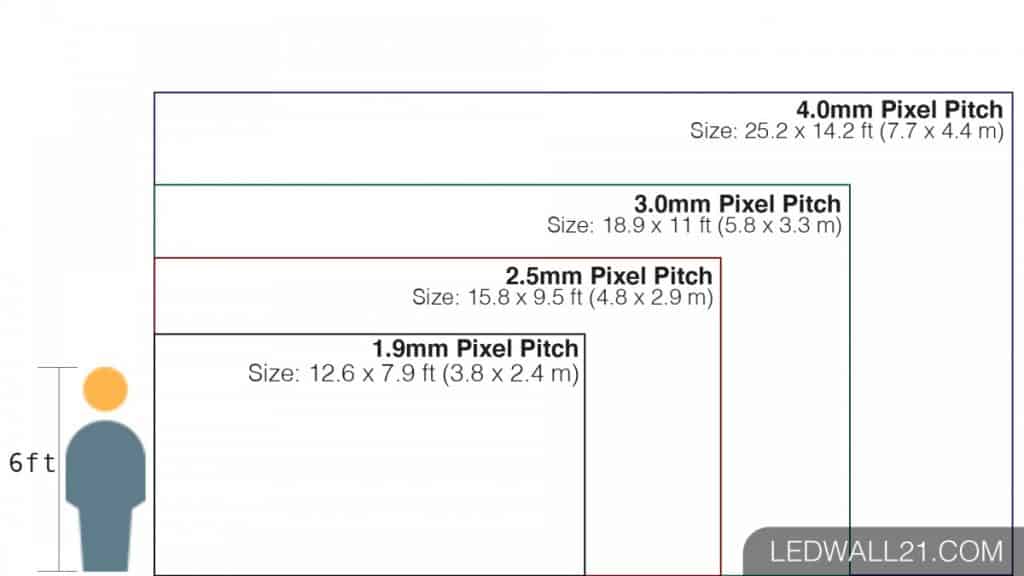
Pixel pitch refers to the distance between each pixel on an LED video wall. The smaller the pixel pitch, the closer the pixels are to each other, resulting in a higher pixel density and better image quality. Pixel pitch is typically measured in millimetres (mm).
- Aspect Ratio
Aspect ratio refers to the proportion of the width of an image to its height. The most common aspect ratio for LED video walls is 16:9, like a widescreen TV. However, other aspect ratios are available, such as 4:3 or 21:9, depending on your requirements.
- Colour Depth
Colour depth refers to the number of colours an LED video wall can display. The higher the colour depth, the more the screen can display, resulting in more vivid and accurate colours. colour depth is typically measured in bits, with higher numbers indicating a greater range of colours.
- Contrast Ratio
The contrast ratio refers to the difference between the brightest and darkest parts of an image displayed on an LED video wall. The higher the contrast ratio, the greater the range between the brightest and darkest parts of the image, resulting in better image quality.
- Refresh Rate
Refresh rate refers to how often the screen updates the image displayed. The higher the refresh rate, the smoother the image appears, with less flicker and motion blur. The refresh rate is typically measured in hertz (Hz).
Understanding image quality
If you’re in the market for an LED video wall, you’ve probably come across the term “resolution.” But what does LED video wall resolution mean, and how does it affect image quality? In this section, we’ll explore the factors that affect image quality and how resolution plays a role.
Factors affecting image quality
Image quality is affected by several factors, including resolution, pixel pitch, aspect ratio, colour depth, contrast ratio, refresh rate, and viewing distance. Let’s take a closer look at each of these factors.
- Resolution: LED video wall resolution refers to the number of pixels that comprise the image. The higher the resolution, the more detailed and sharper the image.
- Pixel pitch: Pixel pitch is the distance between the centre of one pixel to the centre of the adjacent pixel—the smaller the pixel pitch, the higher the pixel density, and the sharper the image.
- Aspect ratio: Aspect ratio is the proportion of the width to the height of the image. The most common aspect ratios are 16:9 and 4:3.
- Colour depth: Colour depth refers to the number of colours displayed on the screen. The higher the colour depth, the more vibrant and realistic the colours will be.
- Contrast ratio: The contrast ratio is the difference between the brightest and darkest parts of the image. The higher the contrast ratio, the more vivid and dynamic the image.
- Refresh rate: Refresh rate refers to the number of times the image is refreshed per second. The higher the refresh rate, the smoother the motion will be.
- Viewing distance: The viewing distance is between the viewer and the screen. The optimal viewing distance depends on the screen size, resolution, and the viewer’s visual acuity.
- Pixel density: Pixel density is a critical factor affecting image quality. Pixel density refers to the number of pixels per unit of area. The higher the pixel density, the sharper the image will be. The resolution and the screen size determine the pixel density. LED video walls are available in a range of pixel densities, from standard to high-definition displays
How Does Resolution Play a Role in Image Quality?
Resolution is one of the most critical factors affecting image quality. The resolution determines the number of pixels that make up the image. The higher the resolution, the more pixels there are, and the more detailed and sharper the image will be. LED video walls have various resolutions, from HD (1080p) to 4K (2160p).
When choosing an LED video wall, it’s essential to consider the screen size and viewing distance. The optimal resolution depends on the screen size and viewing distance. If the resolution is higher, the image will appear pixelated, and details will be recovered. On the other hand, if the resolution is too high, it may not be noticeable at normal viewing distances, and the cost will increase unnecessarily.
LED technology
LED technology has revolutionised the display industry by offering superior image quality and enhancing the resolution of video walls. With advancements in LED technology, display screens have become more vibrant, dynamic, and efficient in delivering high-quality images.
How LED Technology Improves Image Quality?
LED technology enhances image quality by providing bright, vivid colours, deeper blacks, and better contrast ratios. This is achieved through a combination of factors, including
- Colour Depth: LED displays typically have a higher depth than traditional displays, which means they can display a wider range of colours.
- Contrast Ratio: LED displays typically have a higher contrast ratio than traditional displays, which means they can display more detail in bright and dark areas.
- Refresh Rate: LED displays typically have a higher refresh rate than traditional displays, which means they can display motion more smoothly and reduce motion blur.
How LED Technology Impacts Resolution?
Resolution refers to the number of pixels in the display. The more pixels there are, the higher the resolution and the more detail that can be displayed. LED technology impacts resolution in several ways:
- Pixel Pitch: Pixel pitch refers to the distance between each pixel on display. A smaller pixel pitch means more pixels can be packed into the display, resulting in a higher resolution and sharper images.
- Pixel Density: Pixel density refers to the number of pixels per area unit. A higher pixel density means more pixels are packed into the same area, resulting in a higher resolution and sharper images.
- Screen Size: The size of the display also impacts resolution. A larger display with the same number of pixels will have a lower resolution than a smaller display with the same number of pixels.
LED video wall resolution for beginners
LED video walls has become a popular choice for large-format displays. They offer high-quality video with excellent colour reproduction, contrast, and brightness. But what exactly is LED video wall resolution, and how does it affect the image quality?
LED Video Wall Resolution
LED video wall resolution refers to the number of pixels that make up the display. The resolution determines the image quality, with higher resolutions providing more detailed and sharper images. The resolution is typically expressed as the number of pixels in the horizontal and vertical directions. For example, a display with a resolution of 1920 x 1080 has 1920 pixels horizontally and 1080 pixels vertically.
Easy Guide to LED Video Wall Resolution
When choosing the LED video wall resolution, several factors are to consider, including the viewing distance, screen size, and content. Here is a simple guide to help you make the right choice:
- Determine the viewing distance: The viewing distance is between the viewer and the display. The ideal resolution depends on the viewing distance, with higher resolutions suitable for closer distances.
- Consider the screen size: The larger the screen size, the higher the resolution required to maintain image quality.
- Assess the content: The content type also affects the ideal resolution. For text-based content, a higher resolution is necessary to ensure legibility, while video content may require a lower resolution.
LED Video Wall Resolution Simplified
LED video wall resolution determines the quality of the image displayed. A higher resolution provides a more detailed and sharper image. The pixel pitch, aspect ratio, colour depth, contrast ratio, and refresh rate all contribute to the image quality. When choosing the LED video wall resolution, consider the viewing distance, screen size, and content type.
LED Video Wall Resolution Tips
- Choose the right resolution for your viewing distance and screen size to ensure the best image quality.
- Consider the content type and adjust the resolution accordingly.
- Use a higher pixel pitch for larger viewing distances.
- Select a high contrast ratio and colour depth for more vivid and accurate colours.
- Use a high refresh rate for smoother motion and reduced motion blur.
The ultimate guide to LED video wall resolution
LED video walls have revolutionised how we display large-format content. They offer high-quality videos and images with sharp and bright colours. To achieve the best image quality, it is important to have a good understanding of LED video wall resolution.
LED video wall resolution refers to the number of pixels in the LED display panel. The more pixels, the higher the resolution and the clearer and sharper the images and videos will appear. LED video wall resolution is measured in pixels, the small units that make up an image. The resolution of an LED video wall is determined by the number of pixels in the display panel.
How to Calculate LED Video Wall Resolution?
To calculate the resolution of an LED video wall, you need to know the number of pixels in the display panel and the pixel pitch. The formula for calculating the resolution is as follows:
| Resolution = (Number of Pixels x Pixel Pitch x Pixel Pitch) / 1,000,000 |
For example, if a display panel has 1920 pixels horizontally and 1080 pixels vertically, and the pixel pitch is 0.5mm, the resolution would be:
Resolution = (1920 x 0.5 x 0.5) / 1,000,000 = 0.48 megapixels
The resolution of an LED video wall is critical for delivering high-quality video and images. A higher resolution means more pixels, which results in a sharper and clearer image. A low-resolution display may result in images and videos that could be clearer or pixelated, which can be frustrating for viewers.
FAQs
What is LED video wall resolution?
LED video wall resolution refers to the total number of pixels in the display area of an LED video wall. It is typically expressed as the number of pixels horizontally and vertically, such as 1920 x 1080 for a Full HD video wall. The resolution determines the level of detail and clarity the display can show, with higher resolutions producing sharper images and text.
How does LED video wall resolution affect image quality?
The LED video wall resolution directly impacts the image quality of the display. A higher resolution produces a sharper, more detailed image, while a lower resolution produces a blurrier image with less detail. Choosing the appropriate resolution for the application and viewing distance is important to ensure the best possible image quality.
What is pixel pitch in LED video walls?
Pixel pitch in LED video walls refers to the distance between the centre of each pixel in the display. It is typically measured in millimetres and determines the density of pixels in the display area. A smaller pixel pitch results in a higher pixel density and, therefore, a higher resolution display. Pixel pitch is important when selecting an LED video wall for a specific application.
What is the aspect ratio in LED video walls?
The aspect ratio in LED video walls refers to the proportional relationship between the width and height of the display. It is expressed as the width-to-height ratio, such as 16:9 for a widescreen display. The aspect ratio affects how content is displayed on the LED video wall, with wider aspect ratios allowing for a larger viewing area.
What is colour depth in LED video walls?
The colour depth in LED video walls refers to the number of colours the display can reproduce. It is typically expressed as the number of bits per colour channel, such as 8-bit or 10-bit colour depth. A higher colour depth allows for a greater range of colours and more accurate colour reproduction.
What is the contrast ratio in LED video walls?
The contrast ratio in LED video walls refers to the difference between the brightest and darkest parts of the image. It is typically expressed as a ratio, such as 1000:1, with higher ratios indicating a greater difference between the brightest and darkest parts of the image. A high contrast ratio results in a more vivid and dynamic image.
What is the refresh rate in LED video walls?
The refresh rate in LED video walls refers to the number of times the display updates the image per second. It is typically measured in hertz (Hz) and affects the smoothness of motion in videos and animations—a higher refresh rate results in a smoother and more fluid image.
What is the difference between LED and LCD video walls?
LED video walls use light-emitting diodes (LEDs) to create the display, while LCD video walls use liquid crystal displays (LCDs). LED video walls typically have higher brightness levels, better colour accuracy, and wider viewing angles than LCDs. LED video walls are also more durable and energy-efficient than LCD video walls.
What is the best resolution for LED video walls?
The best resolution for an LED video wall depends on the application and viewing distance. A higher resolution with a smaller pixel pitch will result in the best image quality for close viewing distances. A lower resolution with a larger pixel pitch may be sufficient for larger viewing distances. Choosing a resolution that balances image quality with cost and practicality is important.
How do I choose the right pixel pitch for my LED video wall?
Consider the viewing distance and the desired image quality to choose the right pixel pitch for an LED video wall. A smaller pixel pitch will result in a higher resolution and better image quality for close viewing distances, while a larger pixel pitch may be suitable for larger viewing distances. Additionally, consider the available space and budget, as smaller pixel pitches typically result in higher costs.
How do I calculate the resolution of my LED video wall?
To calculate the resolution of an LED video wall, multiply the number of pixels horizontally by the number of pixels vertically. For example, a video wall with a resolution of 1920 x 1080 would have a total of 2,073,600 pixels.
What is the viewing distance for LED video walls?
The viewing distance for an LED video wall depends on the pixel pitch and the desired image quality. For smaller pixel pitches, such as 1.2mm, the optimal viewing distance may be as close as 6 feet. For larger pixel pitches, such as 10mm, the optimal viewing distance may be as far as 100 feet.
What is pixel density in LED video walls?
Pixel density in LED video walls refers to the number of pixels per unit of display area. It is typically measured in pixels per square meter (PPI) and affects the image’s level of detail and clarity. A higher pixel density results in a higher resolution and sharper image.
How do I maintain the resolution of my LED video wall?
To maintain the resolution of an LED video wall, it is important to calibrate and adjust the display settings properly. Additionally, regular cleaning and maintenance can help to prevent pixel failures and other issues that can degrade image quality over time.
What are the benefits of LED video walls over other display technologies?
LED video walls offer several benefits over other display technologies, including high brightness levels, wide viewing angles, and accurate colour reproduction. LED video walls are also more durable and energy-efficient than other display technologies, making them ideal for various applications. LED video walls are modular and easily customised to fit different spaces and resolutions.