

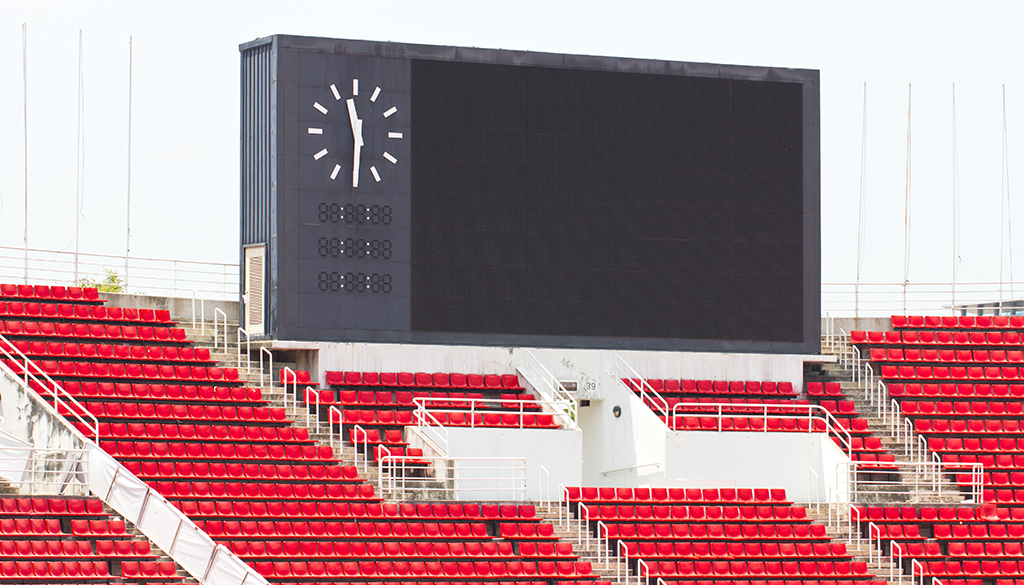
The two basic types of LED displays are indoor and outdoor LED Video Walls. They help businesses reach out to more people and spread their message. An indoor LED screen is a semiconductor LED-based advertising and information medium. Outdoor LED displays are found in large outdoor places.
Indoor LED Video Walls are made of SMD technology and are not protected against exposure to sun or water. Outdoor LED Walls are made of DIP technology. It is protected against dust, rain, sun and solid debris, with an IP rating of between 64 and 67.
Key differences between indoor and outdoor video walls
How can people tell the difference between the two types of LED displays? It is possible to achieve this by observing the appearance. Essentially, the outside display has a larger screen.
In general, indoor and outdoor displays have a wide range of applications. We will discuss in detail the key differences between indoor and outdoor LED Video walls.
Technology
SMD technology is used to make indoor LED screens. The RGB LEDs are placed in a single housing (pixel) soldered directly onto a conductive substrate. Pixels are positioned at equal lengths apart. A pixel pitch is a horizontal distance between two consecutive pixels.
DIP technology is used to make outdoor display screens. Each LED element in a polycarbonate lens is used in DIP technology. Two contacts (legs) protrude from the component and are soldered to a conductive substrate. A pixel of a colourful screen is made up of three (red, green, blue) or more individual LED elements. The horizontal space between two pixels is defined as the pixel pitch.
Outdoor LED displays are also employing SMD technology now. This is possible because of sealed housings, special moisture and dirt-protective coatings, and parts with a wide operating temperature range. SMD technology allows denser pixelation, improving image quality. The image appears more vivid and appealing than on DIP displays.
The distinction between DIP and SMD
The dual in-line package(DIP) is a rectangular electronic component. It has two parallel rows of electrical connecting pins. The packaging is either attached to a printed circuit board or put into a holder. Surface mount technology (SMT) is a circuit electronics manufacturing method. In this method, parts are installed or set directly on the outside of printed circuit boards (PCBs). An electronic gadget known as a surface-mount device is produced (SMD).
SMT LEDs address issues like brightness, viewing angle, flatness, reliability, and uniformity. The appearance of the LED assembly can swiftly cut the material’s weight in half. SMD LED is commonly utilised in interior lighting as a large-screen LED light source. The brightness of the SMD LED has been enhanced as technology advanced. It has also become waterproof.
Distances between Viewing Points
The more pixels there are, the sharper the display and looks better at a close viewing distance. The pixel density required outdoors is lower than that required indoors. Since the observation is farther away. Outdoor LED pixel density is lower, and the pixel pitch is greater than that required indoors. The viewing distance is important for defining the space between two potential pixels. Most outdoor LED screens have viewing angles of 90-110 horizontally and 100-120 vertically.
The pixel pitch in mm corresponds to the shortest viewing distance. This results in a satisfactory image.
Environmental Factors
Indoor LED displays do not tolerate temperature changes and lack increased anti-vandalism protection. The power and interface cables have no special protective coatings against the impacts of an aggressive environment. They are only designed to operate in a room with average humidity (40-60%) and temperature air. As a result, to be able to function in rooms with dirty air and particular noise requirements. The interface and power cords are both weatherproof and designed for outdoor use. Fans or air conditioners are not required for indoor LED displays.
IP Rating and Outdoor Video Walls
Outside LED display panels that are not IP certified or do not meet a rating are prone to damage or failure with long-term exposure. It can be damaged by harsh outdoor circumstances such as rain and dust.
The rigorous IP testing process exposes panels to temperature and pressure variations, as well as dust and water. This process correctly assesses their protective properties.
Outdoor LED displays should have an IP rating of at least IP54 and preferably IP67. This rating indicates protection against dust and solid debris, as well as the capacity to tolerate low-pressure rain. This rating is simple to get on the front of an LED panel. However, there are important ports and connectors that could allow wind, rain, and dust intrusion. Getting this grade for the back of the screen is a larger challenge. Make sure your outdoor LED video wall is shielded on all sides.
Characteristics
Consider the indoor LED display. In the past, the indoor LED display was all surface-mounted. The indoor surface-mounted display has high-definition and colourful qualities. The disadvantage is the high price.
Outdoor displays are made up of plug-in lights. Indoor displays are surface-mounted. The brightness of an outdoor LED display is higher due to the increased outdoor daylight. As a result, the brightness of an indoor display is lower than that of an outdoor display. Outdoor and semi-outdoor features include high brightness, waterproofing, and a large colour palette. The downside is that it requires expert help to install.
Brightness
Exterior screens are brighter than indoor screens. They have superior UV and anti-reflective filters. That allows you to view the image even when the display is in direct sunshine. The brightness requirements for outdoor LED displays are increased by intense outside lighting. The viewing impact will be altered if the brightness is not processed or if glare occurs.
Waterproofing
Outdoor video walls must have a waterproof surface. As a result, the outdoor display is made up of waterproof surfaces. The indoor display may or may not be composed of such waterproof elements. The rear side of the video wall will not be waterproof enough if it is simple and inexpensive. In this instance, the video wall’s border must be completely covered.
Installation
LED display installation methods to vary depending on the user’s environmental conditions.
Outdoor Installation methods include:
- Wall-mounted
- cantilever
- inlaid
- upright
- standing
- roof
- mobile
- arc
Indoor installation is simple and convenient, with only a few types. Outdoor LED display installation is complicated and risky.
Price
Indoor LED displays have a short viewing distance. As a result of its better definition, its price is more than that of an outdoor LED display. Better the resolution, the higher the price. In general, the viewing distance of an outdoor LED display is longer than that of an indoor LED display. It cannot be seen well if the definition is too high. As a result, there is a pricing variation between different types of LED displays. Since they are designed based on the viewing distance.